Teacher Appreciation

When I decided to focus a few posts this month on autism awareness, I was excited to have the opportunity to share someone who works in the field’s perspective.  I’m lucky to have Nicole from the Lovely Poppy guest posting today.  With teacher appreciation happening at schools all over, I thought this one was perfectly timed to wrap up my autism awareness series.
As mentioned throughout my A word series, J’s therapists, teachers, aides, etc have been *vital* throughout our journey.  There is really no other way to put it.  They have become like family.  I can’t express enough the gratitude I have for the people who have surrounded him over the years. 
Take it away Nicole……

I often wonder if I could leave my full time job. Yes, I’d love to stay home and try to run a successful business like many of you- but I’d miss it. I’d miss getting a phone call from a mother who is coming home from the doctor’s office after her child is diagnosed with autism. I’d miss hearing the tremble in her voice and knowing there was something I could do to help. I’d miss hanging up the phone and start thinking of ways to program for her child.

I certainly won’t sugarcoat it, having a child with autism is HARD, HARD work. Many of the families that we work with are forced to have one parent stop working and stay at home full time, helping the therapy team implement programs, balance medications and wear the teacher-therapist-counselor-comedian-chef hat.

I started working with children with autism five years. Within the first few months I noticed changes in the children we were working with. We taught the first child I worked with how to ride a bike, use the bathroom, and eventually hold a conversation. I would leave work at night feeling like I made a difference, and I would wake up in the morning excited about the opportunities ahead. Words cannot describe that feeling that I would get after the parents recognized and participated in the progress of their child.

During a typical day of therapy we follow the child’s motivation and set up situations to target attainable goals and skills to enhance the lives of not just the children, but their families, too. Over the past five years I have seen monumental changes with the children I’ve worked with. It is a passion of mine to support therapists so that families can learn strategies that will help children obtain goals that no one thought possible. Over the past year, I’ve implemented some new services that involve inclusion.

The word inclusion has quickly become one of my favorite “work” words.

“Inclusion is a philosophy that urges schools, neighborhoods, and communities to welcome and value everyone, regardless of differences. Central to the philosophy of inclusion are the beliefs that everyone belongs, diversity is valued, and we can all learn from each other” (Renzaglia, Karvonen, Drasgow & Stoxen, 2003).

Inclusion is one of the many great things our autism services team recognizes as a cornerstone in the lives of those who participate in our program.  Ultimately, we want the children and adults that we serve to function in a typical environment. Whether it’s sitting at a baseball game with friends or going to the grocery store with Mom on Sunday morning.

Our program recently had a child who’s programming was focused around social skills and relationships. Our team took him to the playground everyday after school and worked on having him create and maintain friendships. By the end of the school year, the child who used to sit by himself in the lunchroom was now sitting at a table with a group of his friends who routinely came over for play dates and sleepovers.  Another example is that of a child with autism who successfully integrated into a Boy Scouts troop. He is now capable of attending sessions without additional support and as a result, he has been able to build very strong relationships and gained real life experiences.

On a larger scale, we’ve recently launched our free sports clinics.  These clinics are available not just to children with autism, but to their siblings as well. Our first clinic was done in collaboration with the football team at a local school featuring roughly 60 children. Brothers and sisters were able to participate with their siblings with autism and other young sports enthusiasts alike.  Parents were able to see all of their kids participate and play in a group setting that has never been available previously. It was a great opportunity for the families to feel safe and have an activity that was focused around their unique needs. One of my favorite memories of the clinic was seeing the interaction between siblings and how much they enjoyed the day together. Looking over at the sideline, I saw a crowd full of parents smiling and taking pictures. I can only imagine how proud they were to see their child out on the football field, running and jumping with high school athletes.
Our social skills groups are yet another opportunity we offer that are run in inclusive environments.  The social skills groups see participants paired up with a typically developing peer. Not only is this educational for the child with autism, but it’s an amazing experience for a typically developing child to learn techniques to communicate with a child on the spectrum. After graduation, we often hear stories about how the peers help out at school when a child is having a meltdown or how they lead a child with autism through relaxation techniques after participating in the group.

I once heard the saying “find a job that you love and you’ll never work a day in your life.” Working with children with autism is a job that I loved. I loved it so much, in fact, that I decided to make a career out of it. I went to graduate school and got a Master’s degree, focusing on autism spectrum disorder. I’m so honored and pleased to have the chance to share with you some of the amazing things going on in the autism field and hope my post gives you a little insight into how hard children and families work to obtain a goal someone else didn’t think was possible.

Thank you so much Nicole for sharing your thoughts with us!  In honor of Teacher Appreciation, I created a little tag to add to gifts for your kids teachers.  I’ll be posting some more teacher ideas soon too.

Just print and attach to whatever gift you get for your kids teacher. 

Download your set of four Teacher Appreciation cards.
For 30days subscribers and personal use only. Thanks!

Adventures in Autism- Going to Disneyland

While visiting a theme park with kids can be fun, it also usually takes planning.  Add a child who thrives on routines and gets over stimulated with crowds, it can bring on anxiety for even the most chill of parents.  Luckily our family has had wonderful experiences at Disneyland.  Today I want to share some of my top tips for making your visit a fun and memorable one.
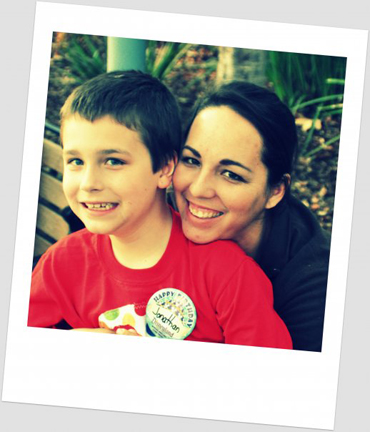
When my son was really little I was really hesitant to make the drive to visit Mickey. All the long lines and the unknown seemed like a big obstacle for a little guy with autism. But then we went and to my surprise, he not only tolerated it, he loved it. We have spent several years celebrating our J’s birthday at the happiest place on Earth.

Although each child is different, these are things to keep in mind when attending Disneyland and/or California Adventure:

Top 10 Tips for Visiting Disneyland

  • Prepare, prepare, prepare. Before heading to the park, talk to your child about your plans. My son loves pictures so we often make photo books to prepare him for a change in routine. Making a book for a trip to Disneyland would help prepare your child.
  • Try to avoid going around high traffic times- during Halloween, Thanksgiving and Christmas the park is packed. Going midweek, especially if it is your child’s first time could make a big difference. We actually prefer California Adventure because it is always less crowded than Disneyland and my son loves Pixar (win-win!).
  • If your child is on a special diet, Disneyland does have options! So instead of hauling all of your own food, do a little homework and your child can eat right along with the rest of you. TACA has a great list of GFCF restaurants and if you scroll down to Disneyland, it is all spelled out. Awesome!
  • Bring a recent picture of your child, just in case. Disneyland is BIG. Things happen. This is especially important if your child is a wanderer.
  • Bring your child’s favorite ________ (fill in the blank). For J, he loves music. So we bring his iTouch and headphones. When he starts getting overstimulated or overwhelmed, we first give him the option of that.
  • When you arrive at either Disneyland or California Adventure, go to Guest Services near the front of the park off of Main Street and request a “guest assistance card.” We have brought our son’s diagnosis paperwork but have never needed it. The pass is good for up to six people and the child with the disability is required to be with you to use it. This is key to having a good experience with our son- he doesn’t do well with long lines and this pass makes it so that we go to the wheelchair access for each ride. Some rides aren’t as well marked as others, but if you ask a cast member, they will gladly show you where to go.
    I’ve also heard of people using a lanyard with a protector on it just to make it easier to show at each ride. We will be doing that on our next trip.
  • If your child doesn’t do well in tight spaces, I would suggest you steer clear of these rides:
    – Finding Nemo
    – the Haunted Mansion
  • Most children with autism wouldn’t do well with these attractions:
    – World of Color – standing only, long show
    -Fantasmic – another long show
  • If you do encounter a meltdown (there will be plenty of “typical” kids right along with yours ;) , don’t worry. There might be people that stare, there may not. You can ask a cast member for the closest quiet spot and take a time out.
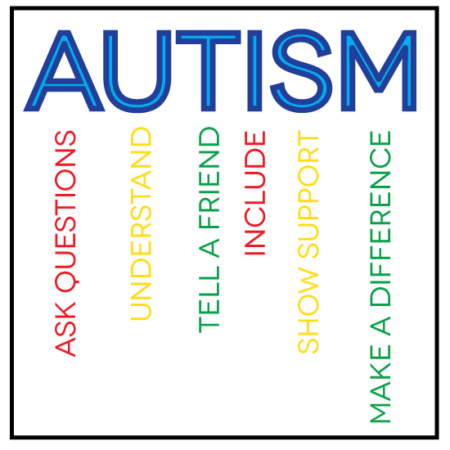
    I also made autism cards that I bring along for travel- pass one out if you need to!

    Feel free to download them for personal use. For your son or daughter.
  • Most importantly have fun!

Even with planning ahead, things rarely go as planned- sometimes better and sometimes worse. What we love most about Disneyland and California Adventure is that we make memories every time we go.

If you don’t have a child with autism, there’s a good chance you’ll run into a child with autism. I had a great experience while riding the tram on the way to Disneyland, I would encourage you to be like the mom we sat by:
While on our way into Disneyland a few years ago, there was a little girl on the tram that was looking at J. She whispered to her mom “Mom he’s sucking his thumb. Isn’t he too old to be doing that?” Very honest question. The mom handled it perfectly. Instead of shushing her daughter, the mom said, “It’s ok for him to suck his thumb. Different kids do different things.” I LOVE that she addressed it without skipping a beat. She didn’t make us feel like J had some contagious disease that needed to be whispered about. Please, do that with your kids. And if your kid asks a question without you knowing how to answer, address it with the person. Even if it’s a stranger. If the mom didn’t know what to say, I would’ve gladly answered for her. Open the line of communication with your kids that it’s ok to be different.

With a little preparation, Disneyland really can be the happiest place on Earth!

Puzzle Cake Tutorial from Bird on a Cake

Hello, friends!
I’m Robin, and I blog about my cake obsession over at Bird On A Cake.


I am really excited to be a part of Autism Awareness Month here at 30 Days.
My two youngest children are autistic,
and autism is a topic that I love to talk about!
I am also going to share a fun cake tutorial with you.
 
 
9 years ago, I knew absolutely nothing about autism.
One day a good friend came to visit, and we sat on my couch catching up.
As we watched my almost 2 year old daughter run by,
I made a comment about how she “lived in her own little world”.
My friend asked if I had ever thought about my daughter being autistic.
 
“What’s autism?”, I asked.
 
That night, I went online and found a checklist of autism symptoms.
When I got to the bottom of that list, I had checked off almost every single one.
It felt like the world had just shifted on it’s axis!
I realized that all of the things that I had thought made my daughter unique and quirky
were actually signs of autism.
And that was the beginning of our journey.
 
Three years later, when our son was born, we knew volumes more about autism.
Around his first birthday, my husband and I sat down to discuss
the possible signs of autism we were noticing in our son.
Over the next year, we progressed from thinking,
“Maybe he is autistic?”
to “Probably.”
and then, “Definitely!
I am going to be honest with you.
There are days that I want to shout about how much I hate autism,
and my sanity is hanging by a thread.
There are days that I worry about the future.
And our version of “normal” is very different from most families.
But through it all, I can’t believe how very blessed I am
to be the mother of these three amazing people!
They are my heart.
 
 
“Motherhood is about raising and celebrating the child you have, not the child you thought you would have. It’s about understanding that he is exactly the person he is supposed to be. And that, if you’re lucky, he just might be the teacher who turns you into the person you are supposed to be.”  – Joan Ryan
Puzzle pieces are often used as the symbol for Autism Awareness.
So, I made a cake with chocolate puzzle pieces in primary colors.


Let me show you how easy it was to make!

Start with a silicone mold like this one.
 

Melt some vanilla candy coating or candy melts,
and add food coloring.

Put your candy coating in a decorating bag and snip off the tip. 
Squeeze the chocolate into the mold, just covering the bottom of each cavity.
 

Let them set up, then gently push on the back of the mold to pop the puzzle pieces out.

Arrange them around the sides of your cake, and put a few on the top.

You could also color your cake layers to match the puzzle pieces. :0)

I would love for you to stop by my blog for more great cake ideas.
I share lots of yummy recipes and decorating tutorials!
 

Thank you Robin for not only sharing this super fun cake tutorial and talents with 30days readers,  but also for sharing your personal connection to autism.  The quote you shared is my new favorite!